
20 Consequences Of Promoting Leaders Who Lack People Skills
When someone rises to a leadership position, they are often expected to have both technical expertise and the ability to think strategically. However, what happens when an individual becomes a leader without demonstrating essential people skills? A leader who lacks soft skills can inadvertently lower team morale and damage interpersonal relationships, ultimately hindering productivity.

Bad News, Graduates: LinkedIn Says the Hottest Skill To Have Right Now in 2024 Can’t Be Learned in a Textbook
The skills-based revolution isn’t the future, it’s already here: It’s been over a year since major employers like Google, Microsoft, IBM, and Apple, eliminated their long-held degree requirements for jobs to remove barriers to entry and recruit more diverse talent—much to the dismay of those who have splashed out thousands on a college degree. Now, LinkedIn has put the final nail in the coffin for those hoping that a stellar education alone is enough to land you a killer job.
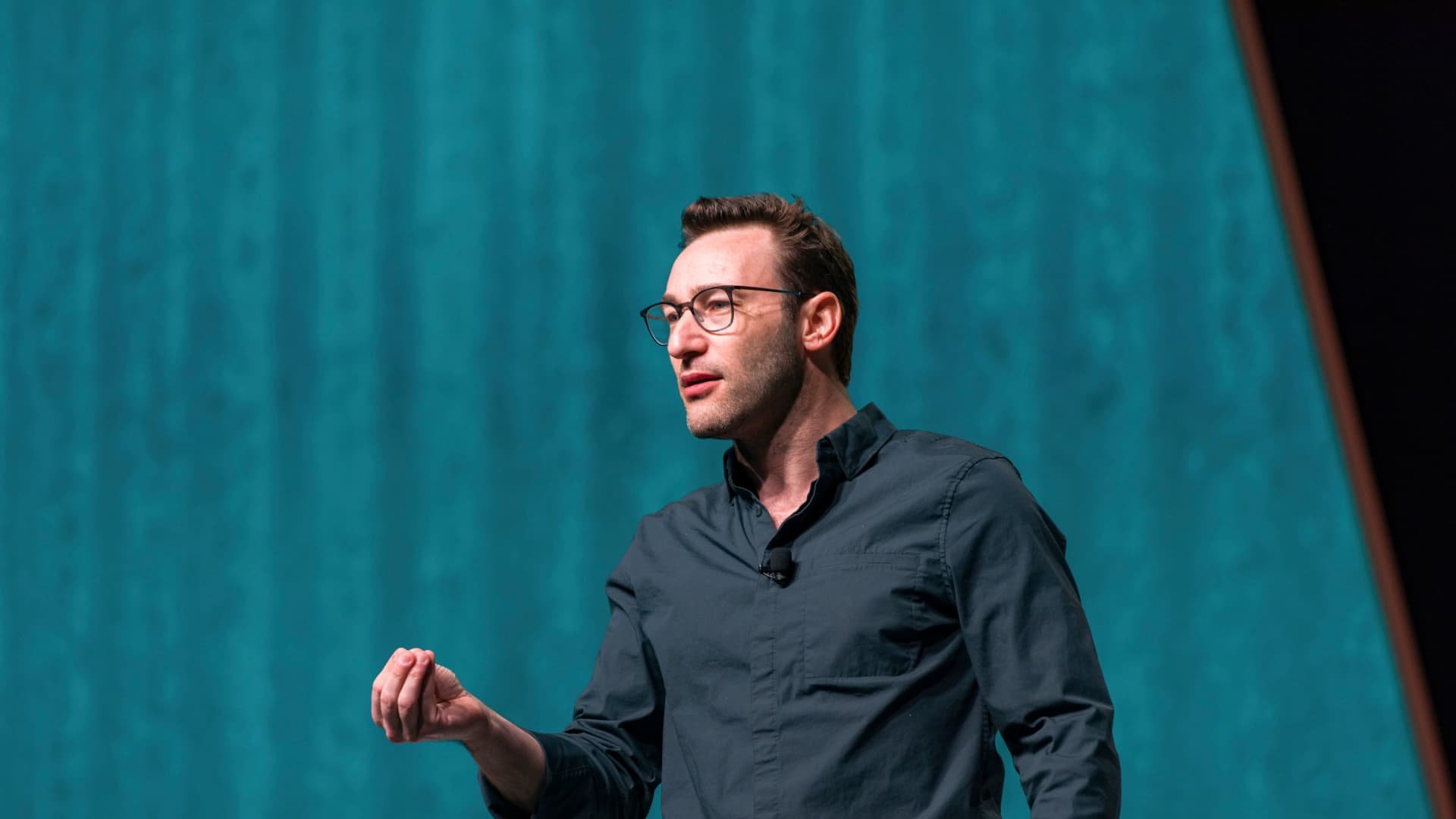
The Most Important Skill Simon Sinek Says He Learned as a Young Leader
In the high-stakes world of professional sports, I've often seen leaders feel the pressure to present themselves as infallible, unerring, and flawless. I've seen coaches act as if they needed everyone to know they hold the playbook for every possible scenario, and athletes constantly feel the urge to justify their mistakes, not to have to accept their imperfections.

The Emotionally Intelligent Leader: Strategies for Enhancing EQ in the Workplace
Effective leadership extends beyond simply completing rote management tasks: It requires a high level of emotional intelligence (EQ). This crucial skill, encompassing the ability to understand, manage, and express one’s emotions and handle interpersonal relationships ethically and empathetically, has become essential to leadership success. EQ is not only about being aware of your emotions, but also about using that awareness to lead, inspire, and positively impact your team and organization.

5 Mistakes I've Seen CEOs Make When Identifying and Developing Their Managers
Over the last twenty years, I've coached and trained hundreds of leaders to be more effective on the people side of the business. Observing middle and senior-level managers overcome their limitations and develop greater emotional intelligence to become better leaders has been an immensely gratifying experience.

Three Insights to Help You Build Bridges Across Differences
At a time of extreme political polarization, heightened racial tensions, and cross-cultural conflicts in the United States (and beyond), how can we encourage Americans to build relationships with—or even just try to understand—people who have different backgrounds or views from their own? And how can scientific research help us chart a positive path forward for our multi-racial, multi-ethnic democracy?

Why Leaders Need To Say No To Be Successful
Saying yes to every opportunity that comes up can help you achieve a certain level of success. However, continuing to operate from a place of automatically saying yes can often hold you back from achieving your next level of success, whether that be climbing the career ladder or running a successful company.

Change Is Inevitable: Here’s How to Ensure It Doesn’t Slow Down Your Leaders or Their Teams
Leaders will remember the 2020s as distinct for many reasons, most of all for the unprecedented number of changes. Consultants and journalists rushed to their keyboards to make it all make sense. What should learning leaders do with this information? This article will help you cut through the noise — providing best practices for developing leaders who can navigate the current landscape of change and futureproof their organization when more changes come their way.

Google Research Says What Separates the Best Managers From the Rest Boils Down to 8 Traits
Becoming a successful manager is no cakewalk. It involves working both sides of your brain to manage tasks and lead people. That means building trust with team members and continuously improving oneself. So, what are the qualities that make a successful manager? Let's revisit classic Google research that still stands the test of time. In 2009, Google launched Project Oxygen with the intention of developing better bosses.

Einstein’s 7 Rules for a Better Life
When it comes to living your best life, Albert Einstein — notorious as the greatest physicist and genius of his time, and possibly of all-time — probably isn’t the first name you think of in terms of life advice. You most likely know of Einstein as a pioneer in revolutionizing how we perceive the Universe, having given us advances such as

Six Ways to Hold Better Meetings
“Most people feel meetings are not as effective as they could be,” says Abrahams, a lecturer in organizational behavior at the Stanford Graduate School of Business and host of Think Fast Talk Smart: The Podcast. “However, it is possible to have well-run meetings that are productive, that you look forward to, and that good things come from.”

Work Smarter, Not Harder: 6 Tips for Leveraging Strategy
Hannibal crossing the Alps to surprise the Roman army. Charlemagne’s conquest of Western Europe. The Allies’ D-Day invasion of Normandy. These are the powerful images conjured by the word “strategy” – military maneuvers using smart tactics to secure victory. But strategy isn’t just for winning wars. There’s a famous saying that goes, “Most people spend more time planning their summer vacation than planning their lives.”

How Does Micromanagement Affect Employees?
Micromanagement isn't just a corporate buzzword, but if you haven’t experienced it personally, you might not fully understand just how negatively it can affect employees. You also might be micromanaging without even realizing it. Here’s how micromanagement affects individual employees, teams, and organizations. What is Micromanaging?

Empowering Leadership: Top 5 Ways Managers Can Be Effective Coaches
The workplace is undergoing a radical transformation. Generational shifts, technological advances and economic turbulence have created an environment where traditional corporate ladders no longer inspire talent. Today’s employees prioritize purpose, growth, and human value over impressive titles and managerial power. In the past, successful careers meant ascending narrow departmental rungs, starting from the mail room, and gradually working your way up to an executive corner office.

The Neuroscience Of Empathy— And Why Compassion Is Better
In today’s world of intolerance, conflict, and divisiveness we would all benefit from more kindness and emotional intelligence. And some organizations are truly trying to build these skills. In research cited in HBR a while back, we learned that 20% of U.S. companies now offer empathy training to their managers and leaders. That’s a great beginning. And as a leadership and culture coach, I applaud it.

Asking These Types of Questions Will Make You Look Smarter
“If I had an hour to solve a problem and my life depended on the solution, I would spend the first 55 minutes determining the proper question to ask . . . for once I know the proper question, I could solve the problem in less than five minutes.” So said Albert Einstein, arguably one of the greatest minds of modern times.

Charlie Munger Shares His 5 Tips for a Successful Work Life
As I approach my 100th birthday, I’m often asked for advice on how to succeed in business and in life. I have a pretty standard set of advice that applies to most circumstances. It’s worked pretty well for me, and it’ll work pretty well for any other person who uses my methods. I don’t claim that they’re perfect for everybody, but I think many of them contain universal values and can’t-fail ideas.

Hedge Fund Billionaire Ray Dalio: This 5-Step Process Is All You Need to Succeed
In a recent interview with podcaster and former monk Jay Shetty, Dalio distilled his decades of experience into a five-step process, promising a map for success that's as effective as it is simple. The beauty of it is that you don't need to be a Wall Street genius to apply it. Anyone with the will and determination to succeed can use it as a guide to navigate their own journey.

Forget About Time Management. ‘Energy Management’ Is the Best Way to Protect Yourself From Burnout
Someone in your life has probably uttered the clichéd (but true) wisdom that “you can’t buy more time.” The art of managing the seconds, minutes, and hours we have at our disposal is a lifelong project—but what if we’re looking at things all wrong? What if, instead of focusing on building time management skills, we started bolstering our energy management skills?

Ditch This ‘Self-Destructive’ Habit, Says Leadership Expert Simon Sinek—‘All It Does Is Exaggerate Insecurities’
Many bad habits can hinder your goals — but the “most self-destructive” habit is so common, that you may not realize just how damaging it is. As human beings, we can’t help but to compare ourselves to others, and comparison is the deadliest thing we can do to ourselves because we will always come up short,” Simon Sinek,