


Nine Tips for Giving Better Feedback at Work
Matt Dailey, a software engineer for a data management company, was managing a team with an engineer who wasn’t performing well. This was clear to Dailey—and to the employee. Yet, as I describe in my new book Mastering Community, Dailey said he “wasn’t bridging the gap of how to make the situation better.” His team missed their deadline.

4 Ways to Adapt Your DISC Style Without Burning Out
DISC is an incredibly popular assessment tool for a reason; it’s comprehensive, actionable, and easy to understand. But what happens when your DISC profile reveals that your current position isn’t a great fit?
One of the ways that you can determine this through a DISC profile is by looking at both your Natural and Adapted scores.

How B2B Businesses Can Get Omnichannel Sales Right
During the early stages of the pandemic, many B2B companies considered remote interactions as a temporary patch, a way to stay in touch with customers while sales reps were confined to their home offices. Now, it’s becoming clear that omnichannel is here to stay, and many businesses aren’t prepared for this permanent change.

Has Buying Changed and Has B2B Selling Adapted?
My articles begin with analogies so we'll start by asking, has baseball changed? Games take longer, there is role specialization, starting pitchers rarely complete games, hitters are stronger, pitchers routinely throw in the mid 90's and there is a trend towards either hitting a home run or striking out. But it's still baseball. It is still played the same way. The changes are superficial.
And in the context of how it affects salespeople, has buying really changed?

Channel Sales Success Starts Here
Channel sales represents 75% of the world’s commerce, according to Forrester’s Jay McBain. That being the case, there is a huge need for sales enablement to ensure those sellers can perform effectively for their partner companies. If your company is among that 75%, you know channel sellers—partners, distributors, indirect sellers, or independent agents—have different needs than inside sales reps.

The Vital Role of Positive Feedback as a Leadership Strength
I am about to show you that most managers have some mistaken beliefs about the best kind of feedback to give their direct reports. In a survey we shared on Harvard Business Review of 7,631 managers, my colleague Joe Folkman and I asked whether they believed that giving negative feedback was stressful or difficult, and 44% agreed. When talking with managers about giving feedback, we often hear comments such as, “I did not sleep the night before,” “I just wanted to get it over quickly,” “My hands were sweating, and I was nervous,”

How to support a struggling friend
Your friend is devastated. She’s just lost her job and looks like she’s about to burst into tears in the middle of the busy coffee shop. You don’t know what to do. You want to help her, but what do you say in this horrible situation? How do you make her feel better right now, and how can you help her get through the tough time to come?

12 Habits To Become A Better Leader
If this year’s resolutions reflect previous years’ resolutions, 80% of people will fail. Why such little success? Unfortunately, the seeds of failure are built into the resolutions themselves. Though crafted with good intentions, these resolutions are all framed as outcomes. For example, losing weight isn’t something you do; it’s an outcome of other things you do (e.g., change your diet, exercise).

Empathy Is The Most Important Leadership Skill According To Research
Empathy has always been a critical skill for leaders, but it is taking on a new level of meaning and priority. Far from a soft approach it can drive significant business results.
You always knew demonstrating empathy is positive for people, but new research demonstrates its importance for everything from innovation to retention.
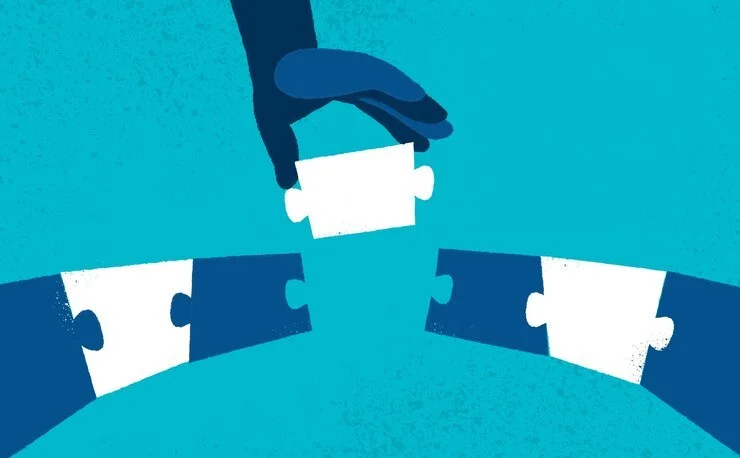
Bridging the Hard/Soft Skill Gap in Sales Training
Any salesperson will tell you that what they do is part science and part art — part hard skills (the actual knowledge of the product and the market) and part soft skills (the interpersonal aspect of sales).
Today’s sales training paradigms take a divide-and-conquer approach to developing the hybrid of soft/hard skills that drive direct sales interactions

Where Do Salespeople Fit in the Digital World?
In-person meetings between customers and salespeople were once at the heart of B2B buying and selling. Now digital communication is embedding itself in every aspect of business. This had led some organizations to look at the future and ask a simple question: Will we still need salespeople?

How to Get Sellers to Fall in Love with Your Sales Content
The struggle to create content that sales loves is real. For some marketing teams, in fact, their story is a tragedy, with sales using only 30% of the enablement content that marketing creates. Sometimes it’s a matter of sales and marketing not being in alignment. And other times, the two might agree on the goal, but content misses the mark, can’t be found, or can’t scale.

Smart Growth For Your Sales Organization
Leading the transformation from a transactional business to selling broader solutions is a major challenge for most companies. Especially when you have a sales organization that is already very good at what they do. So how do you communicate and execute on your vision for the organization? It starts with a change in mindset –– a different mental model.

Three Reasons for Leaders to Cultivate Intellectual Humility
As a leader, do you feel like you have to know it all? Or that expressing uncertainty or revising your viewpoints would undermine your effectiveness as a leader?
Unfortunately, this way of thinking can backfire. Nurse-leader and author Karlene Kerfoot, writing about health care, suggested that when leaders become entrenched in their routine thought processes, they are more likely to disregard others’ helpful ideas and innovative models of leadership.

Why No One on Your Team Wants to Be a Manager Anymore—and How to Change That
According to a CareerBuilder survey of over 3,600 workers, most people don’t want to be managers. Of the subset who are interested in rising to management, they make up slightly over one-third of organizations (34%). This slim percentage does not provide enough innate appetite from individual contributors to fill company’s need for aspiring managers.

Work Is Changing—This Will Help You Prepare
January 20, 2022 Planning for the future of work has always been important. However, the COVID-19 pandemic accelerated the next big organizational shift—turning a hypothetical future into an immediate reality. In this rapid pivot, organizations gathered key learnings with long-term potential to improve operating models, employee experience, productivity, and more.

Four Ways to Intentionally Develop Your Leadership Abilities
After all of the years that I’ve worked in leadership, there is one question that resurfaces again and again: Are leaders born or made?
While you can’t ignore that everyone is born with certain traits that will affect leadership abilities, this is not the end of the journey. Part of the challenge as leaders is to understand what those traits are and how to further develop them.

What You Need to Know About Selling and Marketing During the Pandemic
Every business has been affected by the Covid-19 pandemic in one way or another. Employees getting sick, a rapid shift to remote work, labor shortages, and supply chain issues are just a few of the challenges companies have dealt with these last two years.
Just as businesses have changed, so must sales. If you're not making changes in your sales processes, you're probably leaving money on the table.

Busting the Five Biggest B2B E-commerce Myths
Once seen as secondary to in-person sales, the e-commerce channel has rocketed to the forefront since 2020 and is now a key purchasing gateway for many corporate buyers.
Despite this, misconceptions abound, with a number of B2B companies telling us that “customers aren’t ready” and “e-commerce is an immature space for businesses like ours.”

How to Speak the Language of Decision Makers
These days, top salespeople know to speak the language of their clients. If your client is a straight-shooting, direct communicator (think New York stereotype), you can be equally direct with them. If your client is reserved (think Midwest farmer’s daughter), direct communication can be intimidating. While it can be tough enough speaking with one buyer and understanding their style, today’s challenges and uncertainty make buyers extra cautious.